

What book of the Bible would you turn to if you wanted the clearest, most comprehensive explanation of the gospel ever written? The giants of church history—Luther, Calvin, Tyndale—all pointed to the same answer: Romans. As we launch into this new series at Covenant Christian Fellowship in Galway, we begin where Paul begins—with his own stunning credentials and the magnificent gospel he was set apart to proclaim.
As we begin a new series of sermons here in Galway, working through a book of the Bible rather than a series of topics, there is no better place to start than the book of Romans. The aim is to focus on something foundational—the essential truths of the gospel—for the benefit of those who may not have been Christians for very long, but also for all of us, so that we are clear on the fundamentals of the faith.
And what a book to study! As John Stott puts it in his commentary, Romans is “the fullest, plainest, and grandest statement of the gospel in the New Testament.” Martin Luther called it “really the chief part of the New Testament and truly the purest gospel,” urging that every Christian should know it word for word by heart and occupy themselves with it every day as the daily bread of the soul. John Calvin said that if we gain a true understanding of this letter, we have an open door to all the most profound treasures of Scripture. William Tyndale, the first translator of the Bible into English, described Romans as “the principal and most excellent part of the New Testament,” adding: “The more it is studied, the easier it is; the more it is chewed, the pleasanter it is.”
Romans was written by the Apostle Paul to the church at Rome, probably around the year 57 AD. The main reason Paul wrote this letter seems to have been to address strains and tensions within the church between Jewish Christians and Gentile Christians. Rome was the centre of the world, the centre of the Roman Empire—a melting pot of all kinds of people, a very cosmopolitan place. The church reflected that diversity. When you think of Rome, think of Galway multiplied by a thousand. When you think of the church at Rome, think of Covenant Christian Fellowship multiplied by a thousand—all kinds of different backgrounds, races, and cultures. It is not hard for us to imagine how that might have put pressure on relationships within the church.
So how does Paul resolve those tensions? He sets out the gospel. That is his answer, his antidote, his cure. He presents it as fully and as clearly as he possibly can, because he wants to show these believers that what unites them is far deeper and far more important than any secondary issues on which they might differ. He is going to show that every single human being without exception—whether Jew or Gentile—has sinned and deserves to go to hell forever. But God has shown mercy to all people, Jews and Gentiles alike, providing the same way of salvation for all through his Son, Jesus Christ.
The Author of Romans (v. 1)
Paul writes far more about himself in the opening of Romans than he normally does. He usually says very little, but here he introduces himself at length—probably because he has never visited the church at Rome and needs to establish his credentials. In verse 1, he says three things about himself.
A Servant of Christ Jesus
It is easy to skim over these words, but they are absolutely staggering. These six words—“Paul, a servant of Christ Jesus”—are one of the most remarkable evidences that Christianity is true and not a fairy tale. If you yourself have doubts about Christianity, or if you know someone who does, these six words are a great place to start.
Why? Because of who Paul used to be. This was a man who hated Jesus of Nazareth. He was absolutely convinced that Jesus was a blasphemer and a liar. How could a crucified man possibly be God’s Messiah? The Old Testament said that anyone who was crucified was under a curse—so how could the supremely blessed one be the supremely cursed one? Paul spent his days and nights hunting down every last follower of Jesus he could find. In his own words from Acts 26: “I was convinced that I ought to do many things in opposing the name of Jesus of Nazareth… in raging fury against them I persecuted them even to foreign cities.”
Paul was obsessed—that is not putting it too strongly. He wanted to kill every Christian in the world. He travelled long distances to track them down. Damascus was about 150 miles from Jerusalem, a journey of one to two weeks on foot, and we are told in Acts that he did not even know if there were any Christians there. He went 150 miles just on the off chance, because he had heard a rumour that there might be believers in Damascus.
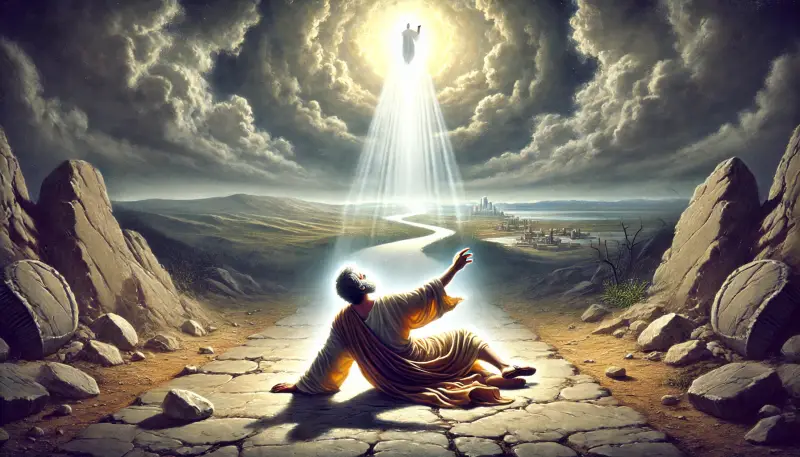
And then, while on a Christian hunt on the Damascus road, something happened to turn his life around completely. He now calls himself a servant—literally a slave—of the very man he once hated. You cannot imagine a more complete and total U-turn. He sees himself as owned and bought by Jesus Christ: whatever Jesus says, Paul obeys. There is only one possible explanation for that transformation—that Jesus met Paul on the Damascus road, proving to him beyond a shadow of a doubt that Jesus really is the Christ, the Son of God, the Lord. And if the gospel worked for Paul, it will work for anyone. No one is beyond saving.
Called to Be an Apostle
Paul is a slave, but he is also a man with authority. The word “apostle” is simply the Greek word for “sent one”—an official ambassador, a spokesperson authorised to speak and act for a higher power. Think of the Irish ambassador to Ukraine, Theresa Hilly. She cannot go to President Zelensky and offer him twenty billion euros of aid and the military support of the formidable army of the Irish Republic off her own bat—she may well want to, but she can only say what the Irish government has authorised her to say. Paul is an apostle of God, and that means his words in Romans are not his own musings about salvation. They are the very words of God himself. We cannot take them or leave them; we are not at liberty to say, “Well, that’s very interesting, Paul, but personally I prefer to think about the gospel differently.” There will be things in Romans that challenge how we think and how we live—about sexuality, forgiveness, our attitude to the state, paying taxes, how we treat other Christians who hold different opinions. And we need to remember: Paul’s words are God’s words.
Set Apart for the Gospel
We want to be taught by people who have personal experience and authority in their subject. If you are going for heart bypass surgery, you do not want a surgeon who comes in and says, “I’ve been teaching myself cardiothoracic surgery in my spare time. I’m a waiter at the local restaurant, but I’ve watched a lot of YouTube videos on the subject and I’ve borrowed all the books from the local library.” That is not what you want. You want someone who has been set apart for surgery—whose whole life is devoted to understanding the human body, who has been recognised as competent by those capable of assessing competence.
That is what we have in the Apostle Paul. He has been set apart by God himself for the gospel. Everything that has ever happened to Paul from his birth has been preparation for bringing the gospel to the whole world. As we read Romans, we are in the hands of an expert. If you want to understand the gospel, there is no one better in the history of the Christian church to teach you than the Apostle Paul.
The Subject of Romans (vv. 2–5)
The subject of Romans—if you have not worked it out already—is the gospel. These opening verses function like a film trailer, giving us a quick summary of the things Paul will deal with in much more detail as the letter progresses. He says at least six things about the gospel here.
1. It Is the Gospel of God (v. 1)
It is not Paul’s message, not invented by Peter or John, not the product of any human being’s imagination. It is God’s gospel—which means it must be true, it must be dependable, and you can stake the destiny of your never-dying soul on what it says. Paul has no right to change it, adapt it, or leave anything out. And the same applies when we share the gospel today: we are not at liberty to omit the parts people might find objectionable.
2. It Was Promised Beforehand in the Old Testament (v. 2)
The gospel is not some last-minute Plan B on God’s part. It is all part of his great eternal master plan for the universe—his plan to undo the damage done by the devil in the beginning. The very first gospel promise appears in Genesis 3:15—no sooner have Adam and Eve rebelled than God announces the good news of salvation. Even before he pronounces sentence on the guilty couple, he promises that one day a man born of a woman in a miraculous way will crush the serpent’s head, though in the process the serpent’s fangs will sink into his heel and he will suffer terribly. The whole of the rest of the Old Testament is the preparation for the coming of that serpent crusher, with more and more information revealed—prophecies describing what he will be like, where he will be born, how he will die—along with pictures like sacrifices, the scapegoat, and the offices of prophet, priest, and king, all pointing forward to the coming Saviour.
3. It Is About His Son (vv. 3–4)
The gospel is not a philosophy, not an idea, not a moral code, not a religious ritual. It is good news about a person—who he is and what he has done. Paul highlights the two stages of Jesus’ human existence. First, his humiliation (v. 3): from his birth to his death, he lived a fully human life, was tempted in every way, obeyed perfectly in our place, and at the cross died to take the punishment we deserve. Then his exaltation (v. 4): the resurrection was the turning point. On the third day the Holy Spirit raised Jesus from the grave and appointed him to be the Son of God with power—no more hunger, thirst, or temptation. He now reigns at the right hand of God over all things for the good of the church, and he is coming again to judge the living and the dead.
4. It Is for All People (v. 5)
Who is this good news for? Paul says it is for “all the Gentiles”—in other words, the whole world. The Jews called the Gentiles “unclean dogs.” A pious Jew returning from a journey outside the Promised Land would shake the dust of the Gentile land off his feet before crossing back into Jewish territory. And yet Paul says the gospel is for them. It is for the most vile drunk in Galway. It is for the most promiscuous person—homosexual or heterosexual. It is for the most crooked thief, the drug dealer, the most self-righteous Roman Catholic or Protestant, the most convinced atheist. That is why we have the bookshop, why we do street outreach on Saturday nights, why the university runs missions. Every person you meet this week, every person you speak to—you have a message that they desperately need, a message that is relevant for them.
5. It Is for Obedience (v. 5)
The gospel demands a response. If you receive a letter from a solicitor telling you that you have been left a legacy of fifteen thousand euros and all you have to do is collect the cheque, you believe it and you act on it—you make the journey to Dublin or Cork to collect it. The gospel demands that we believe this good news about Jesus and act on it by repenting of our sin and trusting Christ to save us. We do not earn it; it is a free gift received by faith. But notice Paul’s phrase: “the obedience that comes from faith.” Someone who has truly been changed by the gospel is someone who wants to obey—to bring their thoughts, words, actions, feelings, and values into line with God’s will. If your life is not characterised by a desire for obedience and a general trajectory towards obedience, that suggests you may not have faith, because obedience comes from faith.
6. It Is for His Name’s Sake (v. 5)
This phrase comes last in the original Greek for emphasis—it is the climax. The whole point of the gospel is to bring honour and glory to Jesus Christ. We do not share the gospel because we want Covenant Christian Fellowship to grow, or ultimately even because we want people rescued from hell—though we do. Ultimately, the gospel brings glory to God. It magnifies his love, grace, wisdom, power, and mercy. When a man or woman, boy or girl, believes the gospel, it brings glory to the name of Jesus Christ. That must be our first request as we pray for our outreach work and for the spread of the gospel here in Galway: for his name’s sake—because he is worthy of worship, worthy of trust, worthy of praise.
This sermon is the first in our Romans series. The series continues with The Recipients of the Letter (Romans 1:6–7).
Add comment
Comments